Divooka™ Explore
Downloadable Content

About this game
Licensing
This software allows limited commercial use.
You may not sell source files created with this software for profit without a commercial license.
A separate commercial license is available for purchase.
The professional version, Divooka Compute (coming soon), has no commercial restrictions.
This version is intended for personal and educational use.
You may use outputs generated by your programs for commercial purposes as long as your total revenue from such use does not exceed $100,000 USD and you are not distributing program files.
For revenue beyond this limit or for distribution, a commercial license is required.
Overview
Explore the fascinating world of digital computation through a powerful collection of tools, interactive playgrounds, and flexible frameworks.
Divooka Explore is more than a tool—it is a platform to learn, experiment, and create.
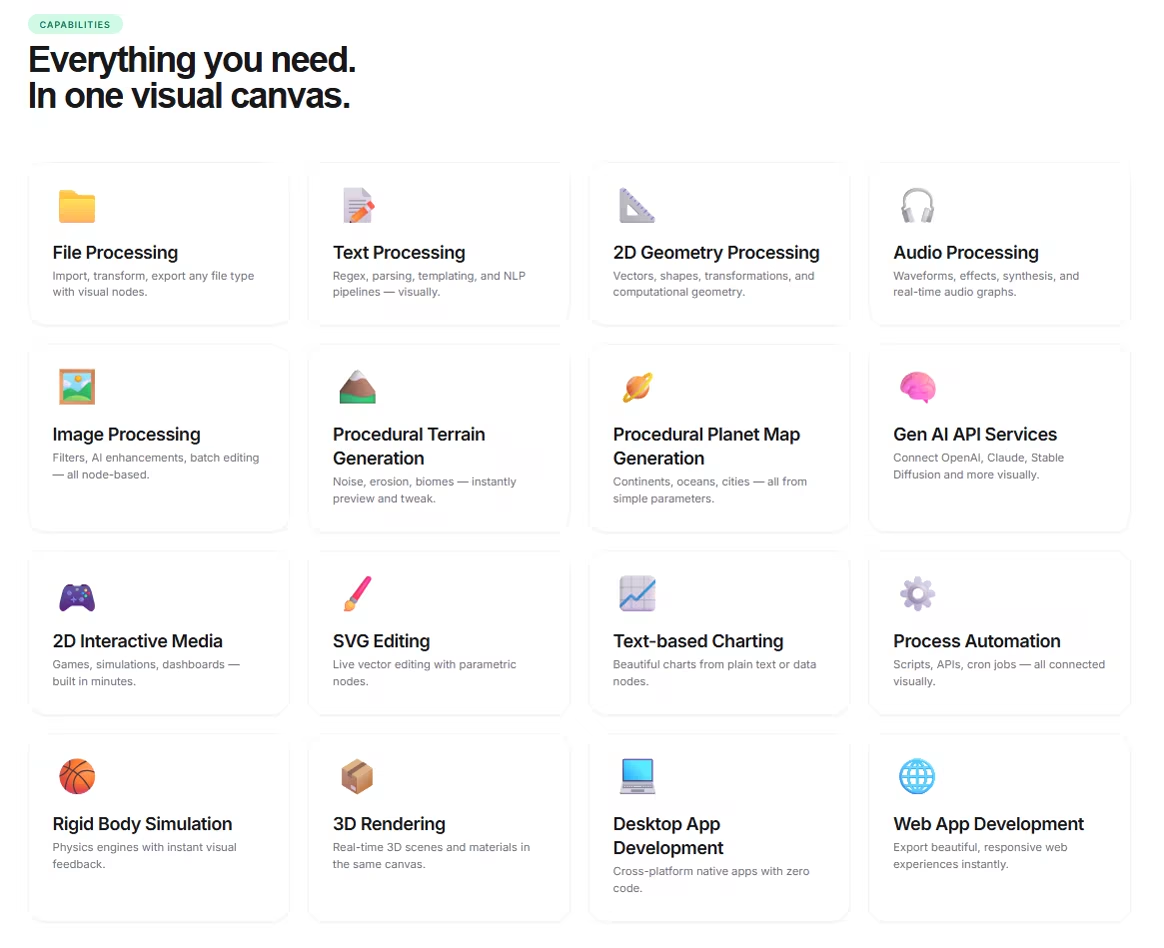
Features
High-level functional API
Visual node-based interface
Fast performance
First-class image and audio processing
Fully programmable APIs
Small file size
Modular design and composition
Clean, efficient user interface
Broad capability across multiple domains
Rapidly evolving feature set
Minimal dependencies, maximum portability
Cross-platform program execution
Permissive license model
Free programming training resources
Utility tools available as DLC
All future DLC included with the base package
Affordable commercial licensing options
Localized function names (Simplified Chinese, Traditional Chinese, Ancient Chinese, Japanese, Korean via DLC)
Fully local execution — no cloud dependency
Full ownership of everything you create
Practical, real-world examples
Modern programming features
Interactive evaluation and live previews
Low system requirements
Fast startup time
Local RAG knowledge base
Default double-precision numeric type
Built for creators, developers, gamers, data analysts, and world builders
Multi-paradigm programming
Comprehensive documentation and textbook
One-click GUI input/output tools
Language features
Multi-paradigm: functional, declarative, imperative, procedural (experimental), OOP, visual, event-driven
Automatic argument coercion
Array dispatch support
Literal structures via property panel
Lambda expressions
Generics (planned/experimental)
Primitive type conversion
Strong typing
Built-in module-level unit testing
Intermediate execution inspection
Turing complete
Editor Features
Dataflow context results preview (on-node and output window)
Quick function search
In-app documentation (Alt + hold on node)
Procedural context visual debugger
Reactive Mode
Primitive Types
Scalars: boolean, integer, high-precision floating-point, text, datetime
Numerics: color, 3D vector
Arrays: collections of scalar values
Compounds: structured combinations of scalars, arrays, and other compounds
Capabilities
Numerical computation and mathematics
Data visualization and plotting
Data table manipulation
HTTP requests
Generative AI (APIs)
Procedural terrain generation
Image processing
File system operations
Web hosting
Interactive graphics
Standalone Tools
Program Launcher (CLI & GUI)
Image-to-ICO Converter
Book Writer
Methodox Knowledge Base
Audio Transcriber
Fluent Music
Programmable Applications
Procedural Planet Generator (same system as Fantasy Planet Painter)
Frameworks
Slide presentation system
See official wiki for an overview of available capabilities and the manual page for full status of available packages.
Execution Contexts
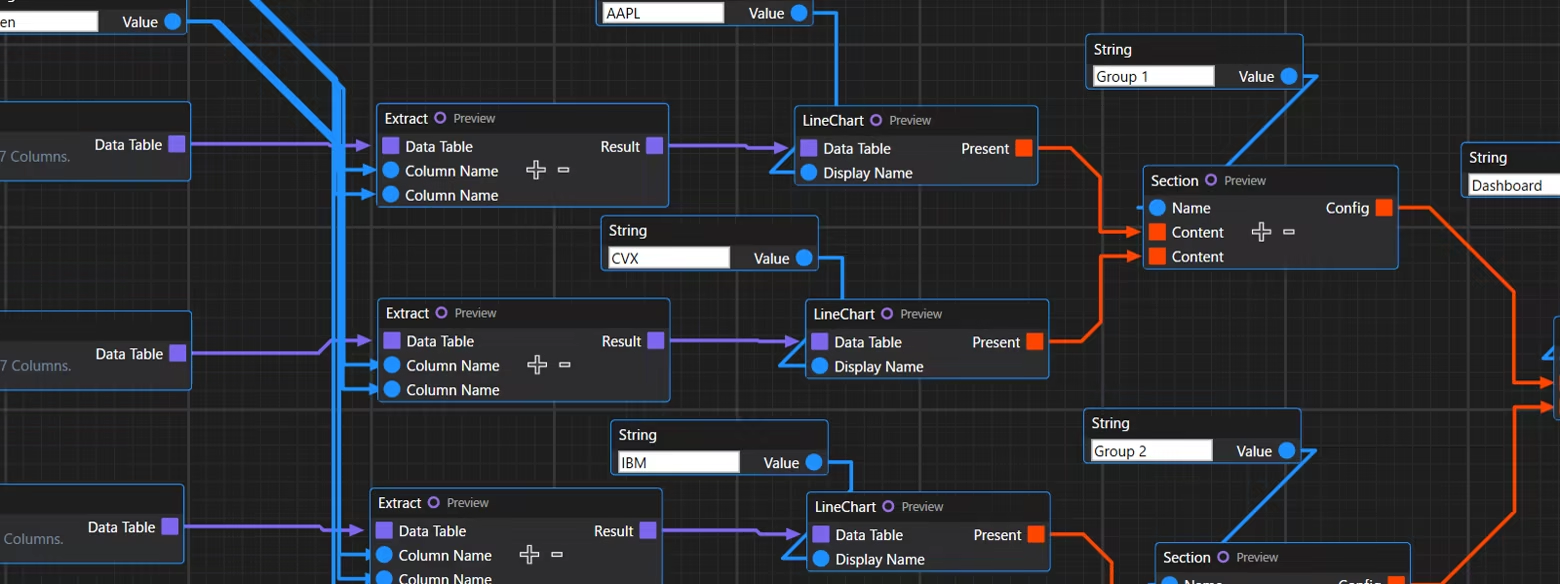
Dataflow Context
Designed for dataflow-oriented applications with side effects.
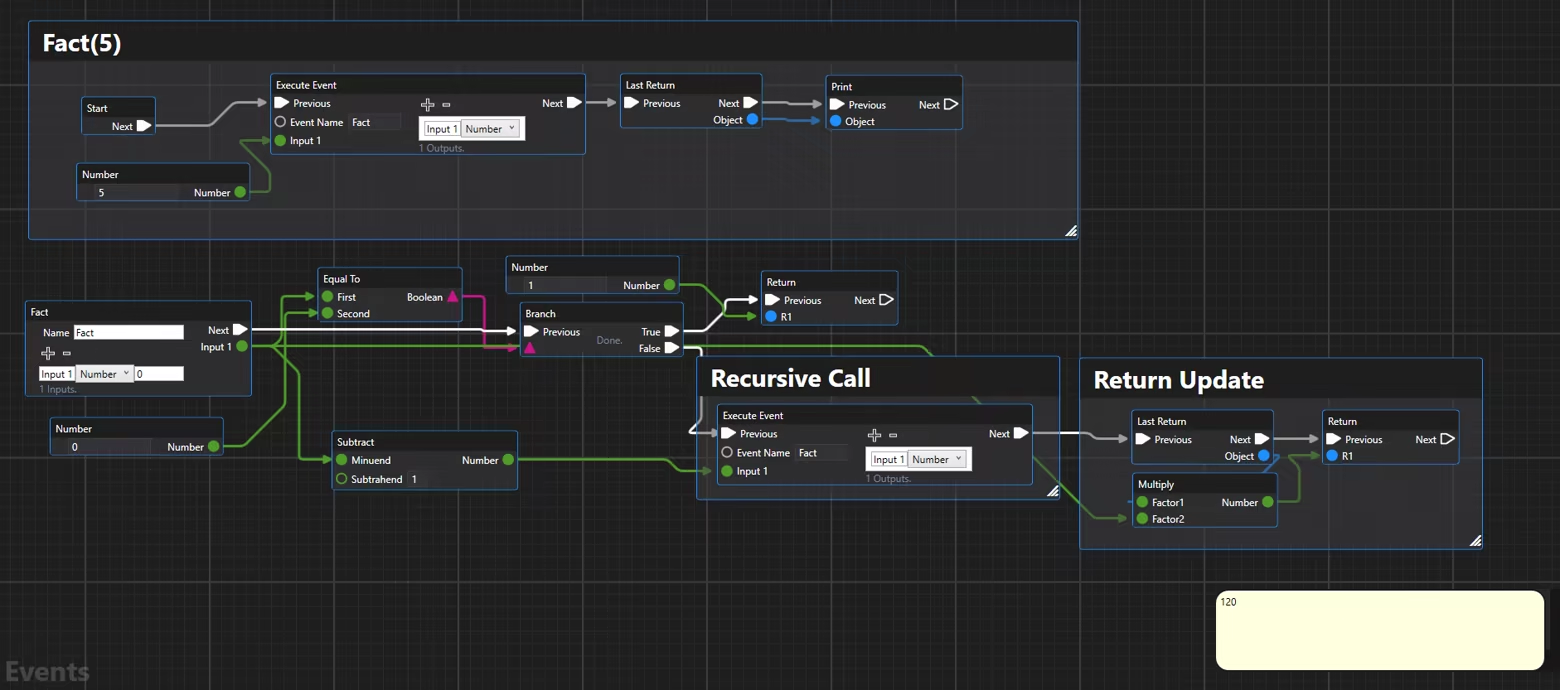
The Procedural Context
Supports control flow such as branches, loops, and callbacks.
Declarative Context
Focused on defining what should be computed rather than how. Ideal for constraint-based logic, structured data definitions, and high-level specifications.
Design Principles
Graph-native: built around nodes and visual interfaces
Balanced abstraction: use nodes where appropriate, code where necessary
High-level efficiency: common tasks achievable with minimal nodes
Not a toy: simple to learn, powerful to scale
High performance: near-native execution speed
Extensible: Divooka-native, C# first, Lua second, Python planned
Accessible: optimized for ease of use without sacrificing capability
Human-first design
Local-first: runs locally whenever possible
Minimal reliance on AI
Enjoyable to use
Known limitations
GUI editor is currently Windows-only (CLI execution is cross-platform)
No copy-paste support yet
Occasional crashes
Incomplete localization (Chinese/Japanese/Korean variants)
Limited documentation and tutorials (in progress)
Backward compatibility not fully guaranteed
Some GUI areas are still under development
No video processing support yet
No advanced 3D processing yet

Divooka is a high-performance visual programming platform designed for creators, developers, and world builders. Build applications, generate worlds, process data, and experiment with computation using a powerful node-based system combined with flexible code-driven workflows.